Certifications Of Evaluation
Peptide Coa Collection: Third-party Set Lab Results
It does not prove every little thing on its own, but it does reveal whether the vendor is making a real effort to sustain the sourcing process with documentation. This instructional content is intended to offer a neutral summary of peptide COAs, screening techniques, and research laboratory documents techniques. In the wider context of peptides for scientific research study, transparency is very closely linked to paperwork requirements. Researchers must have the ability to Click here review the attributes of materials utilized in experimental atmospheres.- Each batch is made under strict quality controls with documented procedures at every action.
- Our team enjoys to respond to any questions regarding our testing process, COA documentation, or product quality.
- Clear vendors make Certifications of Evaluation readily available upon demand before acquire.
- A pureness result has more worth when the paper shows how that outcome was obtained, such as through HPLC, and whether there is any kind of identity-supporting information such as LC-MS.
What A Coa Must Include
All substances supplied by Lone Star Peptide Co. are designated specifically for in vitro laboratory study by qualified scientists. Not for human or animal consumption, therapeutic use, or medical application. Cross-reference the reported molecular weight with published worths from clinical literature or peptide data sources. Resources such as PubChem, UniProt, and peer-reviewed magazines give referral molecular weights for comparison. Call the laboratory directly using call info acquired independently, not from the COA itself, to confirm they performed the screening and that the results match their documents.
Locate Your Coaenter The Set Number Found On Your Item Label
We publish lead to a standardised Bluewell design that is simple to check out and compare. The mathematical results and conclusions are the same from the validated laboratory data. Clear documents, clear communication, and consistent research-use-only placing all matter when comparing sourcing choices.
Trifluoroacetic acid generally remains in peptides as a counterion from HPLC filtration. Levels listed below 1% are generally taken into consideration acceptable for research functions. TFA can be exchanged for acetate or hydrochloride salts if certain applications need TFA-free products, though this typically increases cost. A COA mirrors testing done at a details time and remains legitimate for that batch throughout its mentioned service life, presuming proper storage conditions. Nonetheless, degradation can happen with time or with inappropriate handling, so COA validity thinks the item has actually been stored according to producer requirements.
A Certification of Evaluation offers the analytical structure required to review high quality, consistency, and viability for clinical usage. Without this information, logical outcomes can not be individually reviewed or contrasted throughout vendors. The testing research laboratory, accreditation status, and expert info need to be plainly specified. Small variants in turn accuracy, impurity make-up, or degradation state can considerably modify experimental practices.Each COA is separately tested via Janoshik Analytical and Trustpointe Analytics, validating set purity, fill weight, and compound identity. Each Certification of Evaluation undergoes an extensive evaluation process to confirm product honesty. This record details essential details such as compound recognition, batch number, and molecular framework confirmation. Additionally, our COAs contain results from HPLC-MS screening, which confirms the identity of the substance via precise logical methods. Even with a clear process in place, it's simple to miss little information, especially for labs handling peptides in cooler weather condition.

In peer-reviewed study, authors are anticipated to report the source and pureness of research compounds used. Any research study institution with a values or quality assurance structure will certainly require COA documentation for study compounds. A COA is an important part of peptide documentation, yet it must not be the only element made use of when assessing a distributor.
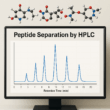
The value of the file relies on whether it is legible, full, batch-specific, and aligned with the product page and vendor information. This overview explains exactly how to check out a peptide COA, what HPLC and LC-MS outcomes can inform you, and which warnings customers ought to watch for prior to making a sourcing decision. Some COAs may reference mass-based or identity-oriented methods that help support verification of the product being reviewed. The key point is to understand that the technique section tells you just how the result was generated. Illustration of just how chromatographic heights are interpreted during peptide purity screening utilizing high-performance fluid chromatography. The lot number attaches the analytical results to the manufacturing set of the research study peptides.If multiple sets of Mass Spectrometry the exact same compound exist, each set ought to have its own COA. Nonetheless, acknowledge that laboratories do upgrade their reporting layouts occasionally. Confirming COA authenticity calls for organized cross-referencing and, when feasible, independent confirmation. Begin by validating the screening research laboratory exists and keeps existing certification. The fundamental function of a COA extends beyond mere governing conformity. It gives proven proof that the peptide you get matches what was gotten, consists of the mentioned purity degree, and is without dangerous contaminants. If the COA consists of very restricted approach info, vague screening recommendations, or unclear lab information, it ends up being more difficult to review the logical context behind the outcome.